
The Accessible Energy Bank (AEB), works by establishing a resilient, three-phase platform to transform energy access for nations. The core mechanism involves resetting the national energy supply network to establish access, energy continuity, and affordability – immediately reducing costs and putting a stop to rolling blackouts. This stability is reinforced by transparent governance, strategic financial instruments to manage risk and provide credit solutions, and a long-term commitment to infrastructure development, including Power Plant and grid development. This foundation then enables a deliberate, structured transition to green and clean energy solutions, ensuring consistent energy access is used to drive economic and human development. If there is an unforeseen disruption to energy continuity – The Emergency Energy Management division steps in to make sure that everyone gets their lights back on.
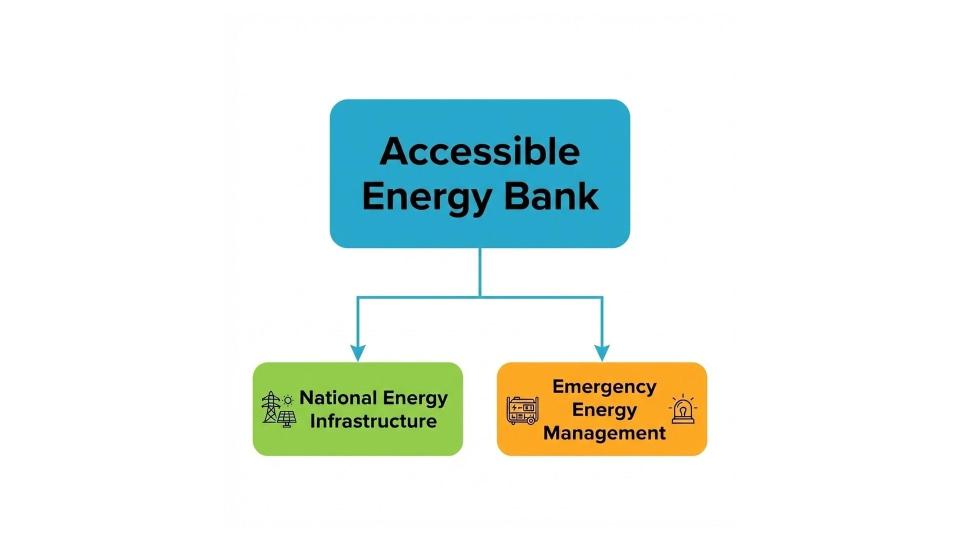
The Accessible Energy Bank is comprised of two divisions:
1) National Energy Solutions; removing barriers to entry in the global energy marketplace, sourcing foreign investment, building infrastructure, green/clean energy transition
2) Emergency Energy Management: Energy continuity for disasters,
How the Accessible Energy Bank Fits Into National Energy Strategy
The Accessible Energy Bank follows a repeatable framework, not a uniform outcome and is designed to integrate with national energy strategies rather than operate alongside them. Engagement is government-led, with each programme aligned to policy objectives, institutional capacity, and long-term development goals.
This approach allows countries to stabilise current energy needs while building the foundations for infrastructure resilience, regional participation, and future transition pathways on their own terms. The AEB manages capacity building to train up the next generation of engineers, mechanics, heavy machinery operators, accountants, and other high level professions and skilled trades.
SOVEREIGNTY, ROLES & DECISION AUTHORITY
The Accessible Energy Bank does not replace national energy policy, procurement authority, or regulatory oversight. AEB functions as a systems and alignment platform. All final decisions remain with the appropriate national authorities.
Governments retain full sovereignty over:
- National energy strategy and priorities
- Procurement rules and approvals
- Regulatory and licensing decisions
- Public finance and fiscal exposure
Government-Led Engagement
Engagement through the Accessible Energy Bank begins with government institutions. National priorities, policy objectives, and institutional capacity inform how programmes are designed, sequenced, and delivered.
This government-led approach ensures that energy initiatives align with national strategies, regulatory frameworks, and public-interest outcomes, while providing clarity for partners involved in delivery and financing.
From Engagement to Execution
Once engagement is established, the Accessible Energy Bank supports structured progression from assessment and planning into implementation. This includes aligning policy objectives, confirming delivery pathways, and coordinating financing and execution partners.
This approach reduces friction, improves transparency, and supports programmes that are credible, scalable, and aligned with national development goals.