
The Accessible Energy Bank was created in 2021 after overwhelming research uncovered the link between socioeconomic growth and a nations barrier to entry into the Global Energy Marketplace. The AEB is a mechanism for accessible and affordable energy to be delivered consistently on a global scale – no matter the region, culture, or credit ranking of the country the people live in.
Everything is Energy and that’s all there is to it”
Albert Einstein
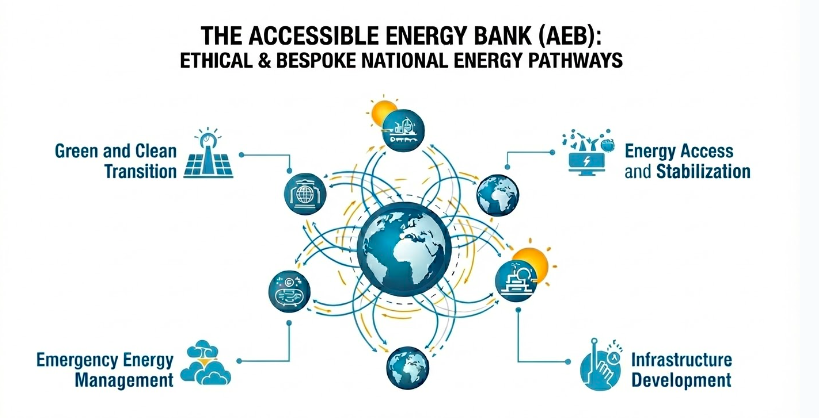
The Accessible Energy Bank is not a traditional bank, investment fund, or aid program. It is a systems-based platform that integrates energy supply access, market stabilization, infrastructure development, compliance-first trade structures, and long-term transition planning into a systemized, repeatable model.
AEB enables countries to secure energy access without predatory pricing, opaque intermediaries, political dependency, or unsustainable fiscal exposure, while creating the conditions required for long-term infrastructure investment.
Why we need the Accessible Energy Bank:
Anchoring Energy Access to Socioeconomic Growth
Many countries face persistent energy insecurity not because of a lack of demand or intent, but due to structural challenges such as fragmented supply chains, limited access to financing, infrastructure constraints, human resource gaps, and high transaction costs.
These challenges reduce governments’ ability to secure reliable fuel access, invest in infrastructure, and participate effectively in regional and international energy markets.
The global challenge of unstable and inaccessible energy directly blocks the path to prosperity for millions. The Accessible Energy Bank (AEB), a transformative led by Aton Path’s Human Impact Metrics, is specifically designed to break this cycle by ensuring reliable energy access, which is the foundational catalyst for long-term socioeconomic development. Here is how the AEB directly links consistent energy access to national growth:
- Fuelling Economic Participation:
- By stabilizing the energy sector and lowering energy costs through direct, transparent-to-refinery trade, the AEB removes a major barrier for countries. This stability is crucial for sustained economic activity, allowing industries from mining to logistics, education, healthcare and beyond – to operate reliably.
- Pilot Project: unlocked significant capital, raising over $2.2 billion USD in U.S.-anchored foreign direct investment into West Africa.
- Creating Human Impact and Jobs:
- The AEB’s framework is rooted in Aton Path’s five key human impact metrics: physical health, mental health, social capital, economic participation, and environmental impact.
- Pilot Project: is set to create over 5,000 direct jobs and includes training and education to empower individuals in skilled trades and STEM professions.
- Building Essential Infrastructure and Grid Access:
- AEB’s phased development model ensures that stable fuel supply is followed by critical infrastructure investment, including the construction of national tank farms, refineries, pipelines, and energy grids.
- Pilot Project: Infrastructure is vital to expand national coverage, with a long-term target of achieving 90% grid access in pilot regions.
- Enabling a Just Green Transition:
- By first establishing energy stability and developing required infrastructure, the AEB creates the necessary economic base for nations to afford and manage the switch to green energy solutions.
- Pilot Project: facilitates the transition of up to 250 million people in the ECOWAS region to clean or green energy by 2035.
The AEB is more than a fuel supply platform; it is a governance and development system that provides the predictable, secure energy required for nations to move from reliance and high-cost intermediaries to self-sustaining economic growth.
Who is Accessible Energy Bank Designed For?
Governments and Public Institutions
Supporting ministries, regulators, and public agencies in stabilising energy access, developing infrastructure, and planning long-term energy systems aligned with national priorities.
Financial, Infrastructure, and Delivery Partners
Providing structured participation pathways for institutions and organisations engaged in compliant, long-term energy delivery and infrastructure development.